Surrealism As a Social Movement

Introduction
Surrealism has a predominant connection with the visual arts these days, but the group's actions were motivated by far greater goals. The Surrealists viewed themselves as agents of social change who taught people how to get beyond societal constraints. In its most basic form, surrealism was a way of life. They defied conventional norms and aspired to achieve what Andre Breton called Surreality in their lives—a state in which an individual's inner reality blended with the shared exterior reality. My objective for this paper is analyzing the Surrealist movement as a social movement by discussing their political accomplishments and intellectual aspirations.
History and Context
Surrealism is referred by historians as a development of Dada which was an early twentieth-century art movement that arose in Europe and New York in reaction to the atrocities of World War I. Authors like André Breton and Louis Aragon got associated with Dada around the beginning of the 1920s. The group's interest in revolution was shared, but they thought Dada lacked a clear plan for taking political action. Breton, later the founder of Surrealism, was interested in contemporary psychological ideas and discoveries, which were influenced by his experiences working in a psychiatric hospital during the war. The Dadaists tried hypnosis and other techniques to access subconscious mental activity in an effort to discover the ultimate source of human creativity. These experiments gave rise to surrealism. As a result, by the end of 1922, an increasing number of radicals had abandoned Dada and were turning instead to the mind for social freedom.
Surrealism emerged from unstable socio-political and economic conditions in the period after World War I, leading up to World War II. People had witnessed atrocities so inhumane that they lost regard for structures of authority and social norms. Surrealists, influenced by the work of Sigmund Freud, experimented with techniques that allowed them to investigate subconscious thought and identity and get over societal conventions that limit people. The goal of Surrealist literature and artwork was to ruin the moral, practical, and logical reasoning that structures the human perception of reality. Surrealist thought would bring out the long-suppressed power of the unconscious mind and imagination to transform reality through a range of creative techniques. The Surrealists understood unconscious, irrational thought as the tools used by people who find new continents and laws of nature, by those who create new tools and techniques, and, at the end of the day, by all revolutionaries whose ideas alter reality in some manner. Everyone could use surrealist thinking techniques and the goal was to awaken the public to the immense creative resources of their own minds and fuel a total recreation of the world.
Tools and Organisation
The techniques used for liberation of the mind included automatism and hypnotism. Automatism was a set of techniques used to encourage the direct and unrestrained expression of unconscious ideas. They developed ways to speak or write rapidly without any deliberate intention or objective. Automatism was seen by the Surrealists as a way of revealing the source of inspiration and enabling truly creative work which would unleash the Surrealist revolution. They believed that the speed with which automatic speech and writing can be produced bypassed social inhibitions, customs, and logic to directly record unconscious impulses and thoughts. Some artists combined automatism with conscious refinement. They used direct automatic production methods and then processed the suggestive marks to produce a more readable image. They also usually left some forms unclear so that alternative interpretations could be made. This allowed viewers to interact creatively with the piece of art and produce an explanation that speaks to their own unconscious desires. What began as a literary thought went on to become an international intellectual and political movement under the guidance of Andre Breton. In Paris 1924, he officially published the Manifesto of Surrealism. Breton states in this First Surrealist Manifesto that people are constantly searching for the truth, therefore they frequently reject ideas that might be viewed as superstition or myth. But Breton and the Surrealists wonder what the truth is and where it can be found, considering how our subconscious and imagination shape the way we see the world. Breton also established the Bureau for Surrealist Research, where members gathered an archive of dream pictures and sociological research by conducting interviews. Twelve issues of La Révolutionsur réaliste, a journal featuring militant treatises, reports on suicide and crimes, and investigations into the creative process, were published by them between 1924 and 1929. Surrealist poets aligned themselves with artists such as Marcel Duchamp, Giorgio de Chirico, Francis Picabia, Pablo Picasso & others because of the analytic, provocative, and erotic qualities of their work. They, however showed contempt for the art market values of the time as they believed artists who are fixated on things like formal harmonies and painting technique are wasting their time on unimportant things while neglecting the powerfully revolutionary potential of human creativity.
Surrealism In Politics
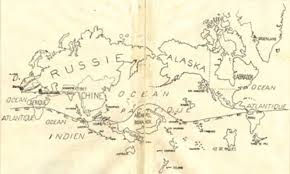
Breton, Paul Éluard, Louis Aragon, and other founding luminaries channeled the remnants of Parisian Dada into a more methodical attempt that aimed at a wholesale social insurgency—a challenging of sexual repressions, bourgeois class, nationalist myths, religious dogma, and the linguistic strictures that promoted and preserved them. Insurrection served as this endeavor's main inspiration and goal, shown by the titles of two of their magazines, La Révolution Surréaliste and Le Surréalisme au service de la révolution. To do this, the Surrealists gradually, irregularly, and often with struggle managed to combine the movement's aspirations with Marxist materialism. The need for revolution was so fundamental to the Surrealist movement that, for much of the late 1920s, they tried to align themselves as the creative and cultural wing of the French Communist party. Naturally, the two groups' incompatibilities prevented any collaboration, but the Surrealists' attempt shows their political objectives. Influenced by Freud’s theory of dreams being coded messages from the unconscious mind, love and sexuality were also an integral part of Surrealist thought. Their opposition to traditional morality and restrictions on the right to freely express one's sexuality was a central theme of political statements and actions. However, it should be mentioned that the Surrealist group only partially promoted liberated sexuality and did not include male homosexuality. They also advocated for anti-colonial and non-imperialist propaganda and held art exhibitions of artefacts from Oceanic cultures. One such example is this map, created by members of the Surrealist movement and published in the Belgian journal Variétés in June 1929. The Surrealists' map (fig.1) is an anti-colonial rant, removes colonial powers to establish a world ruled by cultures not influenced by the West and Communist experiment participants. It is a combination of their own goal, an homage to their influences, and an idealistic vision.
One of the earliest Black members of surrealism was the writer and playwright Pierre Yoyotte and his sister Simone. Avant-garde communities of colour were encouraged to adopt surrealist techniques for the cultural and political resistance against colonialism. Establishing a connection between the "colonial problem" and a broader class conflict gave rise to decolonisation movements in Africa and Asia. There were no female Surrealist painters in the early years but as the movement gained popularity and scale, this began to change. Through their close relationships with Surrealist men, many of the most well known women connected to the movement today got involved. Meret Oppenheim and Lee Miller created their own Surrealist pieces as well as collaborating with Man Ray. Max Ernst introduced Leonora Carrington and Dorothea Tanning to surrealism. Many of the female Surrealists shared the same interest in women as subjects for art as their male collaborators, but there is a clear difference in how they portray women. Artists like Carrington, Varo, and Fini showed women as young and attractive, while male Surrealists frequently portrayed faceless, twisted, and mutilated female bodies.
Role in the Spanish Civil War
In 1936, the Spanish Civil War erupted, and General Francisco Franco launched a military takeover of the democratically elected Popular Front government. After brutal clashes claimed thousands of lives, a kind of military dictatorship was put in place when the war finished in 1939. Joan Miró, Pablo Picasso, and Salvador Dali all used surrealist techniques to convey the savagery and madness of war in response to what was happening in their native countries. Picasso was commissioned to produce an artwork for the Spanish Pavilion at the Paris International Exhibition in 1937 by the Republican government of Spain, which was operating in exile. He decided to visualise the Nazi air strike on Guernica, a small Basque village in Spain, which claimed 7,000 innocent lives. The mural-sized painting (fig. 2.) debuted in Munich the same year that Hitler staged his infamous "Degenerate Art" exhibition. Picasso's depiction of war still remains among the most powerful paintings ever created.
The surrealist paintings of Dalí and Picasso, among others, were symbolic satirical messages of the war and served as global messengers of the horrific events happening across their nation. Both artists depict the war in a bizarre, confused, violent, and bold manner that reflected the Civil War in all its reality. The Spanish surrealism movement came to represent the Spanish Civil War and the country's leftist ideologies. The artistic culture of Spain was more than just a visual representation of the horrors of the war; it actively participated in it, documenting and analysing firsthand accounts of the terrifying events. The people were brought together by the outrageous art; this included not only those who were suffering on Spanish land but also those who were suffering from the effects of the last war and other ongoing conflicts in global politics at the time. This proved how closely related the political and cultural changes in Spain throughout the 1930s were to one another.
International Impact
Surrealism arrived in the United States just as the stability of American life began to melt in the 1930s amidst the stock market crash, the Great Depression, and the ecological chaos of the Dust Bowl. The changing climate and technological adaptations of the land are shown in many of the paintings, and the socially bizarre artwork of the artists raise awareness of these issues. Numerous Surrealists, including André Breton, Max Ernst, André Masson, Matta, Kurt Seligman, and Yves Tanguy, left Paris during the Nazi occupation in 1940 and immigrated to New York City. Their presence in New York also influenced the New York School’s interest in psychology. Despite having their roots in Paris, Surrealism also had small-scale movements in Belgium, England, Czechoslovakia, Mexico, the United States, other countries in Latin America, and Japan. Although Surrealism's peak was from 1924 until the end of the 1940s, Breton ensured the organisation remained until his passing in 1966.
Conclusion
Ultimately, Surrealism as an art style has outlived the cultural movement founded by André Breton, but their cultural significance cannot be overlooked entirely. The group's anti-fascist and anti-colonialist action, Breton's partnerships with Diego Rivera and Frida Kahlo, the Surrealists' significant role in the Spanish Civil War, and their less evident contributions to existentialist philosophy are frequently overshadowed by their visual works. Some ideas presented by Surrealists were revolutionary, some bizarre and some were a combination of the two. They impacted vastly on the social and moral understanding of people at a turbulent time in history, while also documenting their own experience of living in a world plagued by war. Their insistence on irrationality was not merely aesthetic, but an attempt to engage in the political debates of their time. Its essence was radical, activist and social. This makes Surrealism an essential topic not only in art history but also global politics, sociology and psychology.

Bibliography
Art History archives, Museum of Modern Art.
Surrealism overview, Tate Modern.
Surrealist Design, Victoria & Albert Museum.
How Surrealism’s Was Deeply Political (2019), Ela Bittencourt.
Overlap Between Surrealism and Liberation, Artvocate.com
Surrealism As Radicalism, Penn State University Press.
Surrealism & Politics, ARTnews.com


Comments